Posts

Showing posts with the label social media

Social Media Principles Review

This year, I added a social media minor. Whether it was a mistake or not, I am still unsure. Social media principles is a required course for the minor. During this course, I have worked a lot, learned a lot and cried a lot. Overall, the class was enjoyable, but I do have some suggestions. Entering this course, I heard it required a lot of work, but I was up for the challenge. I admit I became very stressed hearing I would have to blog three times a week as well as learn and use The Associated Press writing style. In the end, I actually found this to be an enjoyable challenge. Through this course, I was expecting to learn the many different social media platforms as well as how to best use them for business purposes. This was successfully taught, but it went a little further than expected. The content of the last book, “Measure What Matters,” went far above my head. Personally, I felt it went too far toward marketing and public relations than social media. As a graphic design...

How social media is harming your relationship

Image
When you think you have found the one, it is common to want to let everyone know. Therefore, you spread the word through social media. You change your relationship status on Facebook, and you put your anniversary date in your bio on Instagram. Is this wrong? Not exactly, but Andrew Arnold explains in his article social media can have a negative impact on your relationship if you let it. Some may think this is another hoax to get people off social media, but Havas Media conducted a study which shows the true impact social media has on people. Their survey found nearly one-third of participants exaggerate on social media, including about their relationships. Also, 68% said they have used social media to check on ex-partners, and 75% said they feel social media can destroy or harm relationships. Why is this? Well, Arnold explains, “this is most likely because social media has a way of creating insecurities and frictions, and young people find a need to present themselves and th...

Social media skin tone inclusion

Image
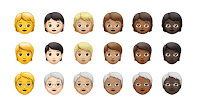
In 2015, the inclusive emoji was introduced. This is where people can select the skin stone of the emoji they choose.   Once the emoji was revealed, people worried what outcomes would result. It was an understandable concern it would be used inappropriately. There was also a possibility it could case racial tensions.   According to this article , the University of Edinburgh has found the result to be quite opposite. Researchers from the University of Edinburgh looked at a billion tweets to collect their data. What they have found through their research is rather interesting. Despite what some people may think, most people who personalized the skin tone did so to match their own. Also, if a skin tone chosen did not match the user, responses were mostly positive. Personally, I think this is good to see the option is not being abused. It is also good to see it is not causing racial drama on social media. Overall, the study found the inclusive emoji fulfilled its purpose...

Quantifying Authority

In “Measure What Matters” by Katie Paine, Paine mentions a subject which caught my attention. The subject is quantifying the authority of a writer or poster on social media. Paine provides a list of ways to determine the influence or authority of the writer. Some of the list items seem quite obvious, but one surprises me. The more obvious list items used to determine authority on social media include: ·        The number of followers the user has. ·        The number of special references and citations the user has on Twitter. ·        The frequency at which the user is uniquely retweeted. ·        The frequency at which the user is uniquely retweeting other people. ·        The frequency at which the user posts updates. Clearly, a user can be seen to have more authority when he or she has more followers and is more act...

A Punishment Alternative: Post or Pay

Image
China has been dealing with a lack of road safety. In fact, an average of more than 260,000 deaths occur on China’s roads each year. According to this article by Nicole Lim, the city of Guangzhou is implementing a new and interesting solution. For those caught disobeying traffic laws, they can apologize on social media instead of paying fines. Then, the post must obtain 20 likes or appear in 10 chat groups. Police say this is not meant to punish people but instead, educate them. Personally, I think this solution is amazing. By having offenders post to social media about what they have done, they are spreading awareness about traffic safety. Therefore, others will learn to not disobey traffic laws. This is also why it is important police are requiring a minimum engagement of the post. This way they know the post has been seen by others. Lim explains the campaign is already making a huge impact. Around a month after the start of the campaign, the number of jaywalkers has d...

A New A-Eye for Soical Media

Image
You probably have heard it before, and it is true. Many employers tend to explore social media accounts of potential candidates. According to a CareerBuilder survey, 70 percent of employers check social media accounts of their candidates. Depending on what you post, this could either help or harm you. According to this article , some employers are going further and having new AI software scan social media accounts. That is correct. An AI software could trash your resume before the employer even knows it exists. Is this fair? From an employer perspective, I can see how this could be very helpful. Screening multiple social media profiles can take some time, and you may miss some things if you do it yourself. As a job seeker, I can see how it could become unfair. AI is new technology, and it does not have morals. It could also malfunction. I would hate to lose a job opportunity because a robot read my post the wrong way. If the program was proven to work perfectly, I would change my...

Twitter

Image
In Jason McDonald’s “Social Media Marketing Workbook,” he calls Twitter “microblogging.” In all honesty, I have little to say about the Twitter chapter, so here is my microblog. I must admit, Twitter is my least favorite platform. Trust me, I have given it a chance, but it is not for me. Although I may not like it, I still believe it is important to understand it and luckily, Jason McDonald has you covered in his “Social Media Marketing Workbook.” He does very well explaining the many different aspects of Twitter such as hashtags and handles. For someone who has never used Twitter before, this would be very helpful because he covers all the basics. For others who have used Twitter before, he does add new knowledge. As a mentioned before, McDonald says Twitter is microblogging. I realize this is a very good metaphor. Tweets consist of a story, opinion, etc. in very few words. McDonald also adds Twitter requires more attention to posts than profile appearance when it comes to m...

Could you give up social media?

Image
I n Bret Molina’s article “Could you quit social media? Your answer may depend on your age,” he explains interesting information found by a survey from the Pew Research Center. The survey found 40 percent of participants said they would find it difficult to give up social media. This is a 12 percent increase from four years ago. The survey also found generally younger adults find it more difficult to part with social media than older adults. I find this information very interesting but through my experience, I believe there are other factors than age. I generally believe the more experience you have with social media, the easier it is to part with it. In other words, you get sick of it. I built this assumption based on my own experience and my observation of others. I personally have been on social media for quite a long time. I may get on social media from time to time but if I had to part with it, it would not be a huge issue for me. On the other hand, I feel my mother would h...

Social Media Threats

Image
Along with school shootings, social media threats are starting to become a common occurrence this year. As shown in this article , threats towards schools on social media are even occurring close to my hometown. Threats like these have been causing schools across the country to panic. It is hard to be sure if these threats are truly dangerous or if they are only a prank. Either way, schools do not wish to take the risk. School shootings are tragic, and it is sad how there has been so many within two months of the new year. Social media threats have always existed, but what caused their sudden rise? I begin to wonder if the rise in school shootings is the cause for this. I personally think it is odd how after the rise in school shootings came the rise of social media threats. Therefore, I come to believe these threats arose because of the attention of school shootings. I do not believe most of these social media threats are real. In my opinion, students post these threats to s...

Facebook: Social Scrapbook or Emotional Hotline

Image
In Jason McDonald’s “Social Media Marketing Workbook,” he brings up an interesting point about Facebook and “fake.” No, he is not referring to fake news, he is referring to fake people. He is not referring to the kind of fake people who have fake profiles either. He refers to fake as people who only share the positive information about their lives. He says, “in general, people put their best foot forward on Facebook: it’s a social scrapbook in many ways about how life ‘should’ be, rather than how life ‘is.’” I find this quote very interesting but through my experience, I would have to disagree. McDonald explains people are not likely to share information about their life struggles or any other negative events.   I do agree most Facebook users post positive information but from time to time, people feel the need to share their struggles. I personally see this quite often on my Facebook news feed. Here are some recent examples: ·        A...

The Power of Reviews

Image
Pretend you got a new phone and you are looking online for a new phone case. You browse on Amazon and find two similar cases. They are around the same price, but they are made by two different brands. Which one will you buy?   Will you close your eyes and blindly pick one, or will you look at the reviews? In Jason McDonald’s “Social Media Marketing Workbook,” McDonald discusses the importance of “trust indicators” such as reviews. In my personal experience, I highly rely on reviews when it comes to products or brands I am unfamiliar with. In the earlier situation, I would first see which case has the most reviews and then, read that case’s reviews to see if I can trust the product, brand and/or seller. I first check to see which product has the most reviews because it can be as important, if not more important, as the product’s actual review. In his workbook, McDonald provides an example of this. There are two different sushi restaurants with reviews on Yelp. The first ha...

Did someone say Party?!

Image
When you think of social media, how would you describe it?   I assume you would list Facebook, Snapchat, Pinterest and Twitter. Yes, these are social media platforms, but how would you describe the experience of social media? Would you say it is like a party? Yes, I said party! Personally, I would have never thought of social media to be like a party, but Jason McDonald explains in his “Social Media Marketing Workbook” how the two are a lot alike. When I saw how the first chapter of the workbook talks about parties, my initial thought was a literal party on social media. I thought, cool, I can see a group of people gathering to hang out on social media together. They could use their phones as strobe lights and dance. No, McDonald says social media is like a party, not a literal party, although I am sure it could be. Think about it, you are invited to a party, you go, you usually but not always have a good time and you leave. Now, think of this idea in relation to soci...

Could Social Media Help Children?

Image
Would you ever think social media could benefit children? I certainly did not, but a study discussed in this article explains it can. Although I still believe social media can be ultimately negative for children, the article brings up some interesting points about how it can be positive in certain situations. The study focused on how social media can be beneficial to children who live in residential care homes. It found social media can help them make relationships and reduce the feeling of isolation. I can see how these benefits can be true, but I am still skeptical. I think it is a great idea for children in residential care homes to use social media to connect with their birth families. This relationship is an important one. Knowing you can connect with your family and they can connect to you can mean a lot to a child. I have experience with this because my main form of contact with my father is through social media. Although these relationships are healthy, I feel ther...

Did you see my Facebook Post?

Image
As I was finishing up Guy Kawasaki and Peg Fitzpatrick’s book, “The Art of Social Media," something stood out to me. Kawasaki opened my eyes to an unknown truth about Facebook, one of my beloved social media platforms. I thought I might have noticed something sketchy before, but now I know for sure there is. To be honest, now that I know this, I am a little upset. After I explain what I am talking about, maybe you will be too. Here is a recent experience of mine to help shed light on the situation: T he other day, I was at my boyfriend’s house and he showed me this neat video of someone we both knew. I told him to share the video so I could share it too. After he did so, I immediately refreshed Facebook and it did not appear. I refreshed it again and got the same result. Then, I scrolled down my newsfeed, and I still could not see it! I eventually had to go to my boyfriend’s profile to find the video. Why was it so difficult to find the video? Where did it go? Doe...

Is Facebook at Fault?

Image
I must admit that Facebook is one of my go-to platforms because it gives me a good variety of everything. I can see pictures, videos and news and yes, occasionally the news is fake. Facebook has been taking some hard hits for not filtering the news that is published, but should we go as far to say that it is “negative for democracy?” According to this article by Merrit Kennedy, people are starting to believe it is. According to Kennedy, Facebook admits that social media can be negative for democracy. Now, did Facebook say this because they believe it is true or did they say it to get people off their tail? After the 2016 U.S. presidential election, people criticized Facebook for not doing enough to stop fake news that could have influenced viewer’s votes. So, are these people ultimately blaming Facebook for the outcome of the election? I completely agree with Mark Zuckerberg when he says , "There's a profound lack of empathy in asserting that the only reason why som...

How to deal with Negativity

Image
On social media, many people have experienced some form of negative comment. There will always be those debbie downers roaming about, but how are we supposed to deal with them? In Guy Kawasaki and Peg Fitzpatrick’s book, “The Art of Social Media," Kawasaki gives some advice I find to be quite intelligent.  One of the first pieces of advice Kawasaki gives is to stay positive. Personally, I find this to be the most important. Of course, no one likes a negative comment, but it is important to remember that one person’s opinion is not everyone’s opinion. It took me a long time to accept it is impossible to satisfy everyone. Therefore, if one person gives you trouble, do not fret about it. Keep your head up and do not let their negativity bring you down.  When you receive a negative comment, there is nothing wrong with commenting back, but Kawasaki explains to keep it controlled. He suggests going only three rounds. This means if you receive a negative comment, you can comm...

What do you want to be when you grow up?

When I was in elementary school, as many elementary kids are asked, I was asked what I wanted to be when I grow up. For a long time, I responded that I wanted to be a zookeeper. Looking back on that answer now, I think, “wow that was an odd answer”. I may think that answer is odd, but it turns out that today, quite a few children respond that they want a career in social media or gaming. Alison Kershaw explains in her article that a study shows these careers have been growing in popularity for younger people. Although these careers do not beat out the answers of teacher or veterinarian, they are still ranked higher than I would ever expect. It took me awhile to find out that these careers even existed as careers, not just hobbies. Therefore, it amazes me the younger generation knows this as a career and wishes to pursue it. I can only assume these children know more about these careers because, as Kershaw explains, they are more exposed to them. I can already see this being true...

Customization is Key

The first step to enter into the world of social media is to create a profile. Overall, it seems simple. You enter your first name, last name, email address, username and then you are done. Sure, creating a profile is easy, but creating a professional and successful profile takes work. What I recently learned from Guy Kawasaki and Peg Fitzpatrick in their book “The Art of Social Media” is that there are many details that can easily be overlooked when creating a profile. A lot of these details contribute to customization. Before, I never realized the importance of the customization of your social media profiles. I thought that once your name was on the page, it was good. Kawasaki and Fitzpatrick basically stress how customizing your profile is key to making yourself appear unique and competent and I agree. If every person on Facebook had no information or pictures on their profile, what would be the point? Who would want to view their profile with nothing to engage in? It is important t...